Chinese Torreya
Chinese Nutmeg Tree
grand torreya
tall torreya
IUCN: Least Concern
#2B260E
#635F46
#4A4726
#1A2317
#A7A28A
Plant palette
Torreya grandis: The Ancient Chinese Nutmeg Yew
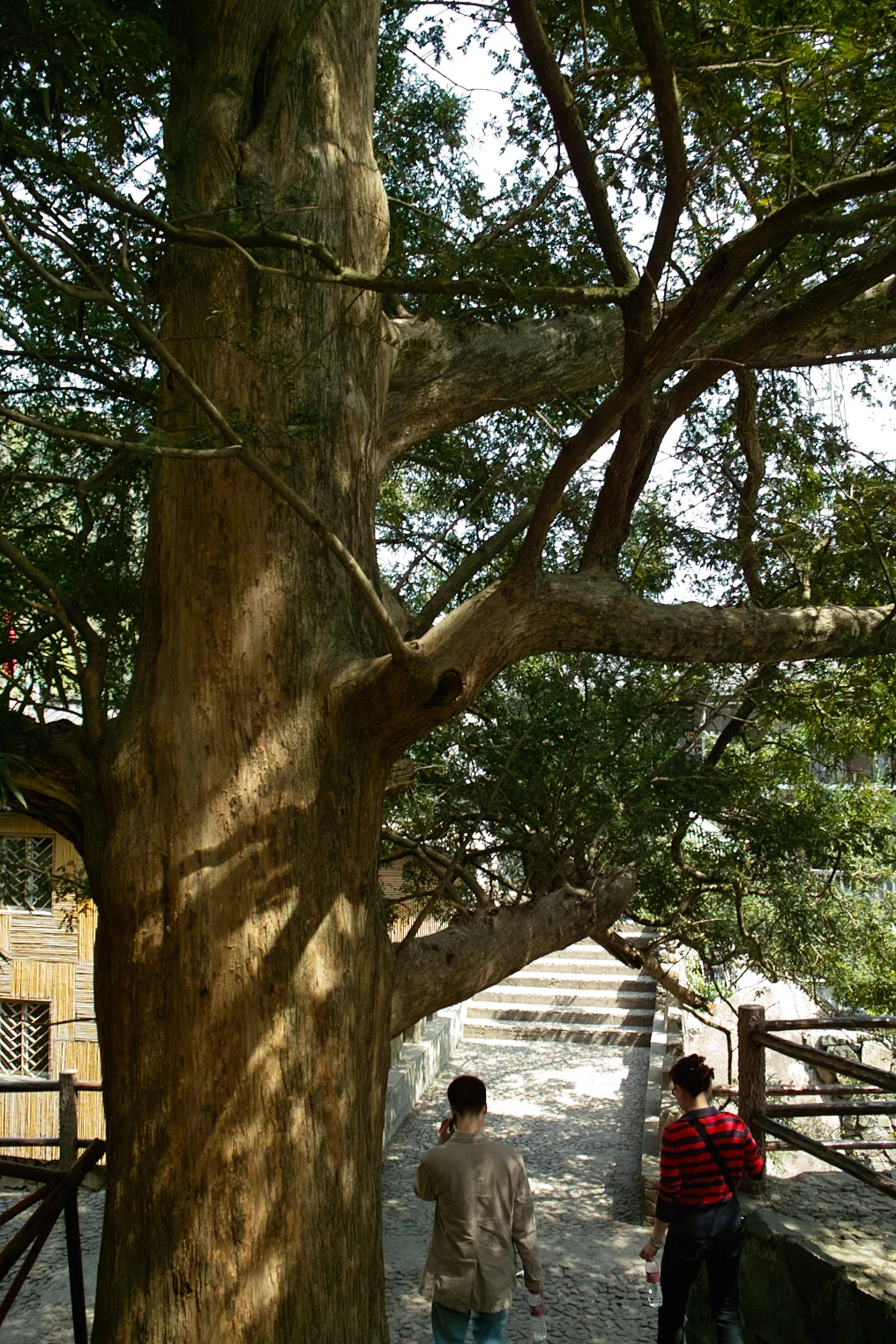
Clinging to the misty mountain slopes of eastern China, ancient giants have witnessed the rise and fall of dynasties for over a thousand years. These trees are Torreya grandis, remarkable conifers whose lineage dates back to the Jurassic period.
Often referred to as living fossils, these magnificent conifers are deeply integrated into the cultural and agricultural history of the region. They produce highly prized, nutmeg-like edible seeds that have been cherished as culinary delicacies and traditional remedies since ancient times.
Torreya grandis develops as a massive evergreen conifer capable of reaching heights between 25 and 39 meters. Its crown is typically conical or rounded, supported by a sturdy trunk with gray-brown bark that becomes deeply fissured with age.
The foliage features linear, lanceolate leaves arranged in two ranks, resembling those of true yews but releasing a characteristic fragrance when crushed. These sharp-pointed needles are dark green and glossy on the upper surface, with two light stomatal bands beneath.
This species is dioecious, meaning individual trees bear either male pollen cones or female seed-producing structures. The morphological characteristics of the reproductive organs include:
Pollen Cones: Oval structures that develop in the leaf axils, releasing wind-dispersed pollen in spring.
Seeds and Arils: The ovoid, hard-shelled seeds are completely enveloped by a thick, fleshy green aril that matures to a yellowish-brown color.
Maturation Cycle: The seeds require a slow development period, ripening in the autumn of the year following pollination.
Flowering season
Pollination occurs in mid-spring, typically during the month of April.
Jan
Feb
Mar
Apr
May
Jun
Jul
Aug
Sep
Oct
Name
Dec
Applications
The edible seeds of Torreya grandis are highly nutritious and can be consumed directly or pressed to extract premium culinary oil. Historically, these roasted nuts served as prestigious tributes to imperial courts and remain a popular festive delicacy in East Asia.
In traditional and modern medicine, various parts of the tree offer significant therapeutic properties. Key applications include:
Medicinal Benefits: Traditional formulations utilize the seeds to treat respiratory coughs, soothe digestive tracts, and eliminate intestinal parasites.
Bioactive Compounds: Modern oncology utilizes paclitaxel extracted from the leaves and bark to formulate cancer treatments.
Cardiovascular Health: Chemical extracts help regulate blood lipids, provide antioxidant protection, and support blood vessel elasticity.
Beyond health and nutrition, the tree provides high-density timber valued for its durability and fine grain. Artisans prize this wood for crafting premium furniture, elaborate sculptures, and traditional Go game boards.
Interesting facts
Dating back approximately 170 million years to the Jurassic period, Torreya grandis is regarded as a living fossil of the plant kingdom. Individual specimens possess an extraordinary lifespan, with some trees continuously producing seeds for over a thousand years.
The cultural significance of this conifer is documented in some of the oldest surviving Chinese texts. Historical highlights include:
Ancient Records: The species was detailed in the second-century BC dictionary Erya and celebrated in classical poetry.
Imperial Tributes: During the Song dynasty, sugar-coated and salted preparations of the nuts were presented as exclusive tributes to the emperor.
Agricultural Heritage: The United Nations recognized the Kuaijishan community, home to a 1,400-year-old tree, as a Globally Important Agricultural Heritage System.
Western Discovery: The famous Scottish botanist Robert Fortune introduced the species to European cultivation in the mid-19th century.