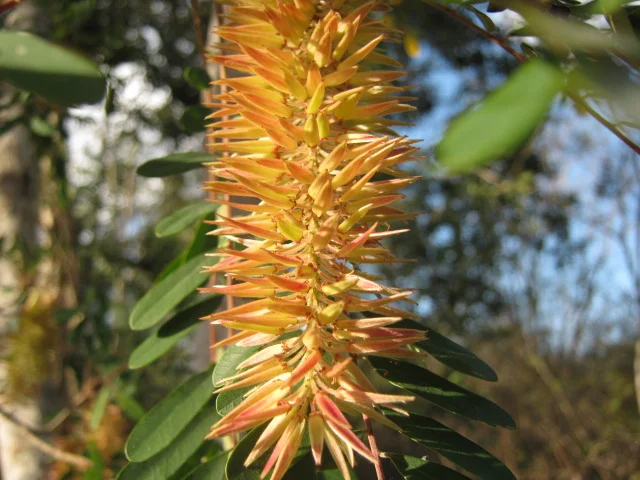
Classic Amorpha-like Alvaradoa (Alvaradoa amorphoides a. subsp. amorphoides)
Mexican alvaradoa
Alvaradoa amorphoides subsp. amorphoides: Botany and Uses
This deciduous shrub or small tree graces dry tropical forests across Mexico and Central America. It stands out with its elegant pinnately compound foliage and clusters of wind-pollinated flowers.
The subspecies is celebrated for its traditional uses and its ecological role in seasonally dry tropical habitats.
Taxonomy
- β ΡΠ°ΡΡΡΠ²ΠΎ Plantae
- β division Tracheophytes
- β subdivision Spermatophytes (Seed plants)
- β Angiosperms
- β mesangiosperms
- β eudicots
- β Superrosids
- β rosids
- β malvids
- β family Picramniaceae
- β genus Alvaradoa (Mexican Wingnut)
- β species Alvaradoa amorphoides (Mexican Alvaradoa)
- β subspecies Alvaradoa amorphoides a. subsp. amorphoides (Classic Amorpha-like Alvaradoa)
Morphology
Key physical traits include:
- Pinnate leaves with 20-50 small, alternate leaflets
- Dioecious flowers lacking petals and arranged in dense racemes
- Winged samaras that dry to a reddish-brown color
Applications
Traditional uses include:
- Dermatological treatments for skin itch and irritation
- Local timber used for constructing small tools and fence posts
- Fuelwood due to the high density of the wood
Interesting facts
The genus name honors the Spanish explorer Pedro de Alvarado. Additionally, the winged seeds are so lightweight they can be carried for miles by wind currents during dry seasons.
Geography of distribution
- Mexico
- Guatemala
- Honduras
- El Salvador
Sources
- Govaerts, R. et al. (2025). Plants of the World Online. Kew Science.
- Tropicos.org. Missouri Botanical Garden.
- GBIF Secretariat (2025).