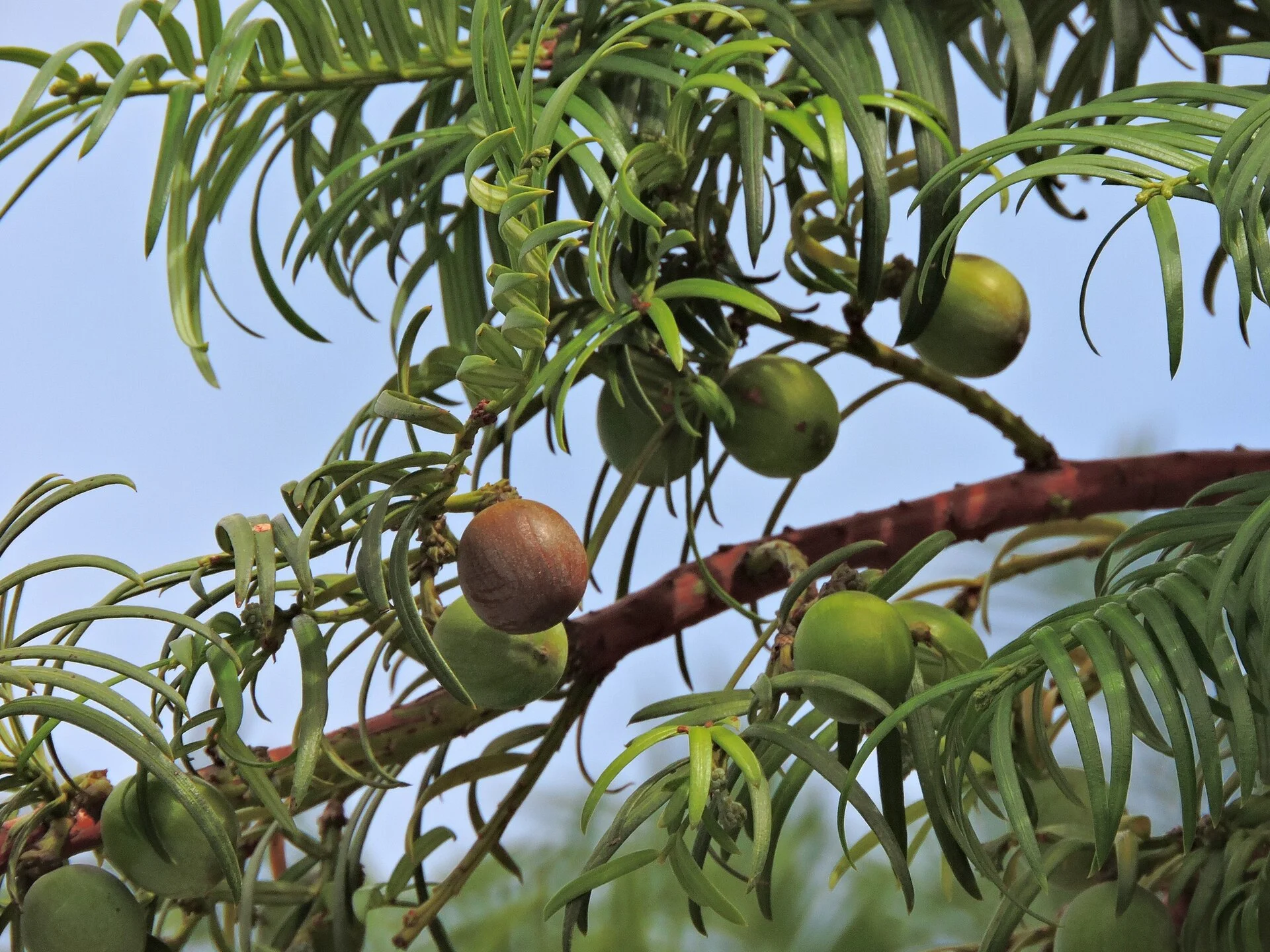
Wilson Harrington's Plum Yew
(Cephalotaxus harringtonia var. wilsoniana)
Taiwan plum yew
Taiwan cow's-tail pine
Wilson plum yew
#5E6741
#BCCFEE
#2F3119
#586854
#424B27
Plant palette
Taiwan Plum Yew (Cephalotaxus harringtonia var. wilsoniana) Guide
Endemic to the misty mountain woodlands of Taiwan, this rare coniferous variety stands as a unique representative of its genus. It thrives in wet subtropical and warm-temperate forest understories, playing a subtle yet important role in the local ecosystem.
First described in 1914 by Bunzō Hayata, its taxonomic status has seen historical shifts between being classified as a distinct species and a variety of Cephalotaxus harringtonia. Current consensus from major taxonomic authorities like Plants of the World Online (POWO) often treats it as a synonym of the parent species, though it remains a conservation priority.
This conifer exhibits growth as a small tree or shrub, reaching heights of up to 9 meters. Its branching pattern is characteristically drooping, and the trunk is covered in a distinctive reddish-brown, flaky bark.
The foliage displays a striking arrangement resembling true yews, detailed by the following characteristics:
Leaf Arrangement: Linear leaves form a V-shaped row along the stem, transitioning to a spiral configuration at the base.
Foliage Color: Young shoots emerge as a vibrant bright green, gradually maturing into a deep, rich forest green over three to four years.
The reproductive structures distinguish this variety from similar conifers. It is dioecious, meaning male and female structures develop on separate individuals, featuring slow-maturing wind-pollinated female cones and clustered male anthers.
Applications
Historically, the high-quality wood of this conifer has been used locally for construction, furniture making, and agricultural implements. The yellowish-brown timber is valued for its dense structure and durability.
Modern interest is heavily focused on the pharmaceutical potential of the plant. A variety of alkaloids, such as wilsonine, are extracted from the vegetative tissues and seeds for ongoing cancer research.
Interesting facts
The common name plum yew is derived from the fleshy seed cones which bear a strong visual resemblance to small plums or olives.
Fecundity in the wild is extremely low due to its dioecious nature and a very long seed maturation period of up to twenty-one months.
Recent DNA evidence suggests a closer genetic relationship to Cephalotaxus harringtonii than to Cephalotaxus sinensis, despite previous morphological confusion.