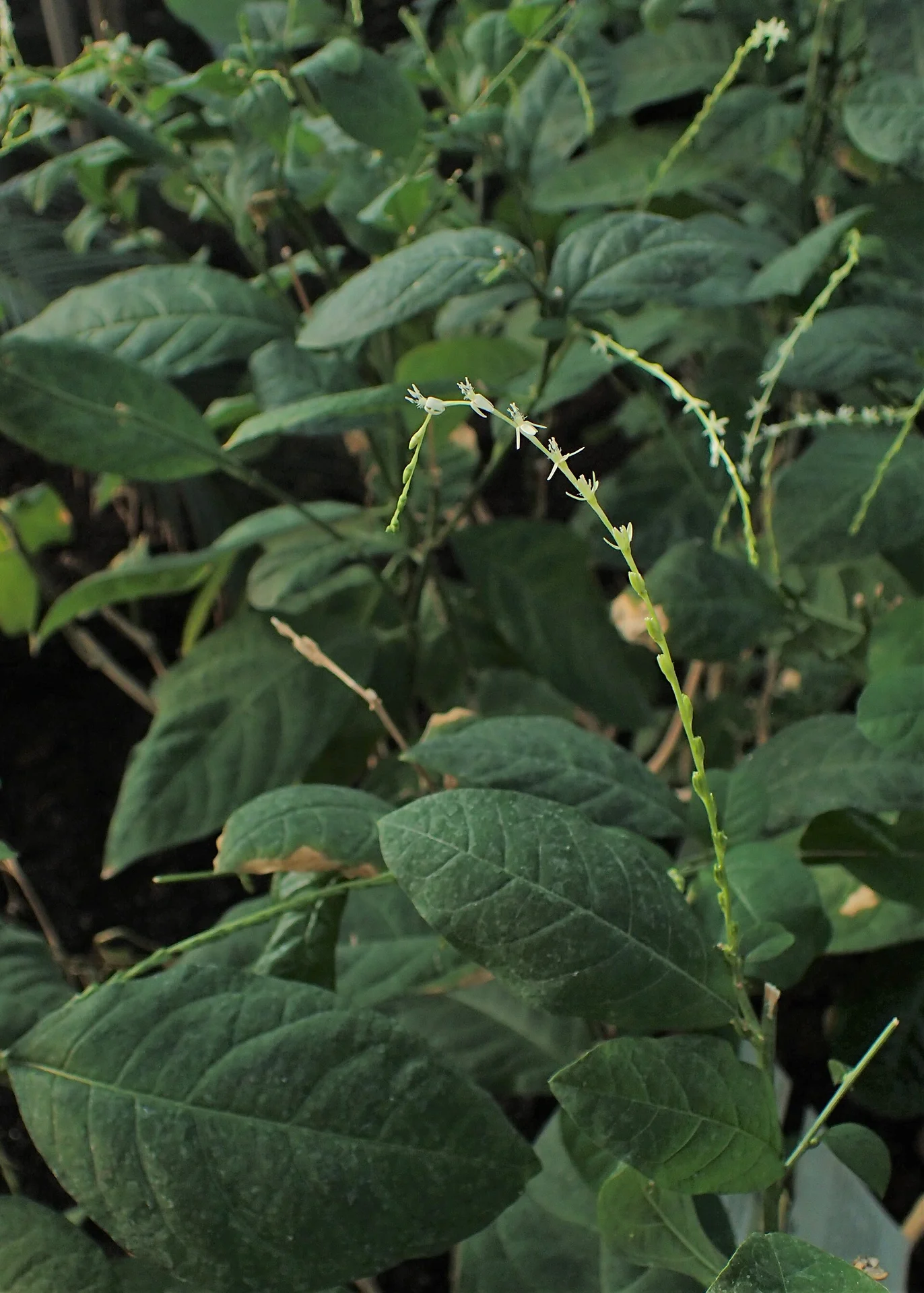
Typical garlicweed
(Petiveria alliacea a. var. alliacea)
Petiveria alliacea var. alliacea: Botanical Characteristics
Deeply rooted in the botanical classification of the Americas, Petiveria alliacea var. alliacea serves as the autonym for its species within the family Petiveriaceae. This specific variety was established automatically according to standard botanical nomenclature following the original description of the parent species by Carl Linnaeus in 1753.
Over the centuries, taxonomists have extensively studied this lineage, leading to a rich history of scientific documentation. Several historical heterotypic synonyms, including Petiveria ochroleuca and Petiveria octandra, reflect the complex morphological variations observed by early botanists across different geographic zones.
Plants of the species Petiveria alliacea are predominantly perennial herbs or robust subshrubs with a distinct structural form. The variety alliacea maintains the core diagnostic features of the species, which include:
Alternate, simple leaves with entire margins and distinct venation.
A very strong alliaceous or garlic-like scent emitted by the vegetative and root tissues when bruised.
These distinct morphological traits, particularly the unique olfactory profile, are essential for accurate field identification by botanists and ecologists.
Interesting facts
Taxonomic revisions have occasionally debated the placement of the genus Petiveria, historically linking it with the pokeweed family, Phytolaccaceae. However, modern molecular phylogenetics firmly supports its placement in the distinct, specialized family Petiveriaceae.
The extensive list of synonyms documented throughout the 19th century by prominent botanists such as Moquin-Tandon and De Candolle highlights the intense historical interest in classifying the regional variants of this ecologically significant plant.