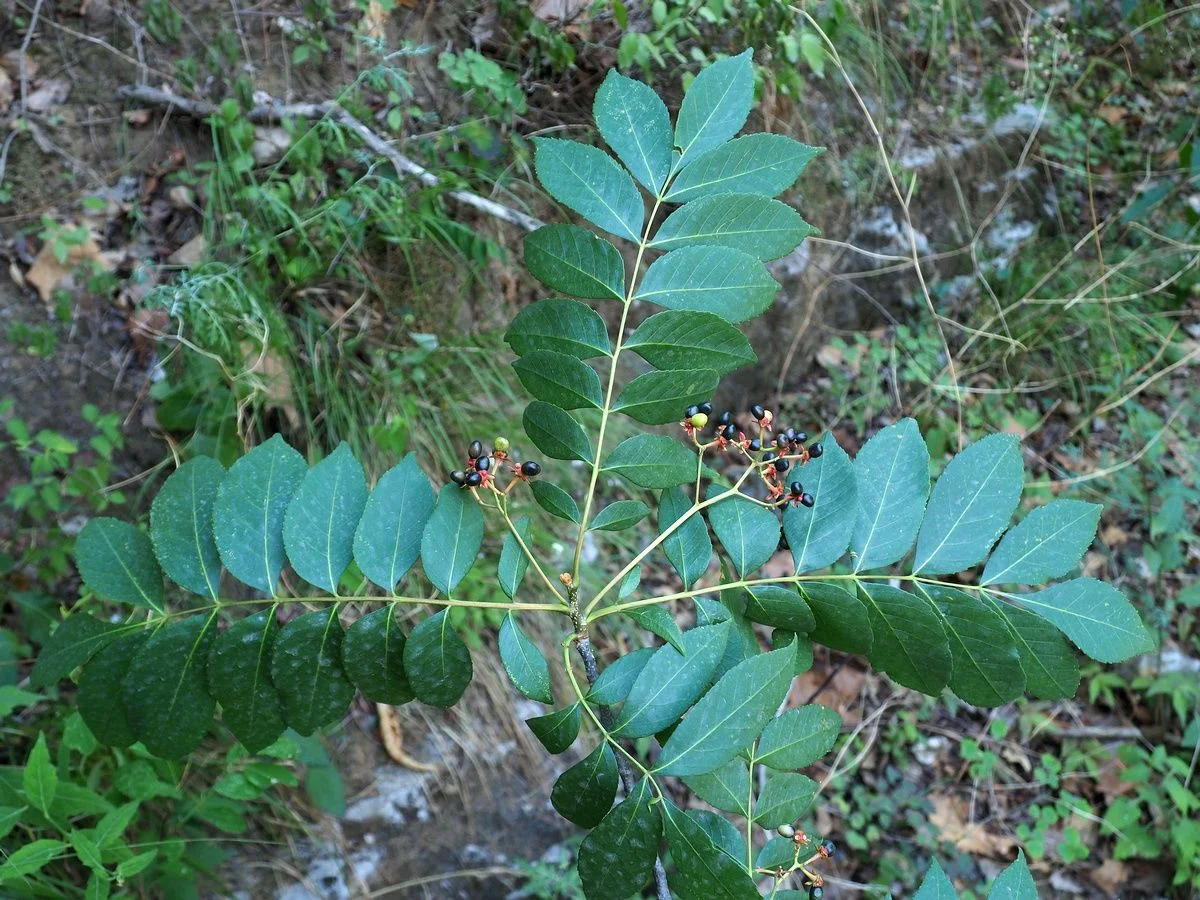
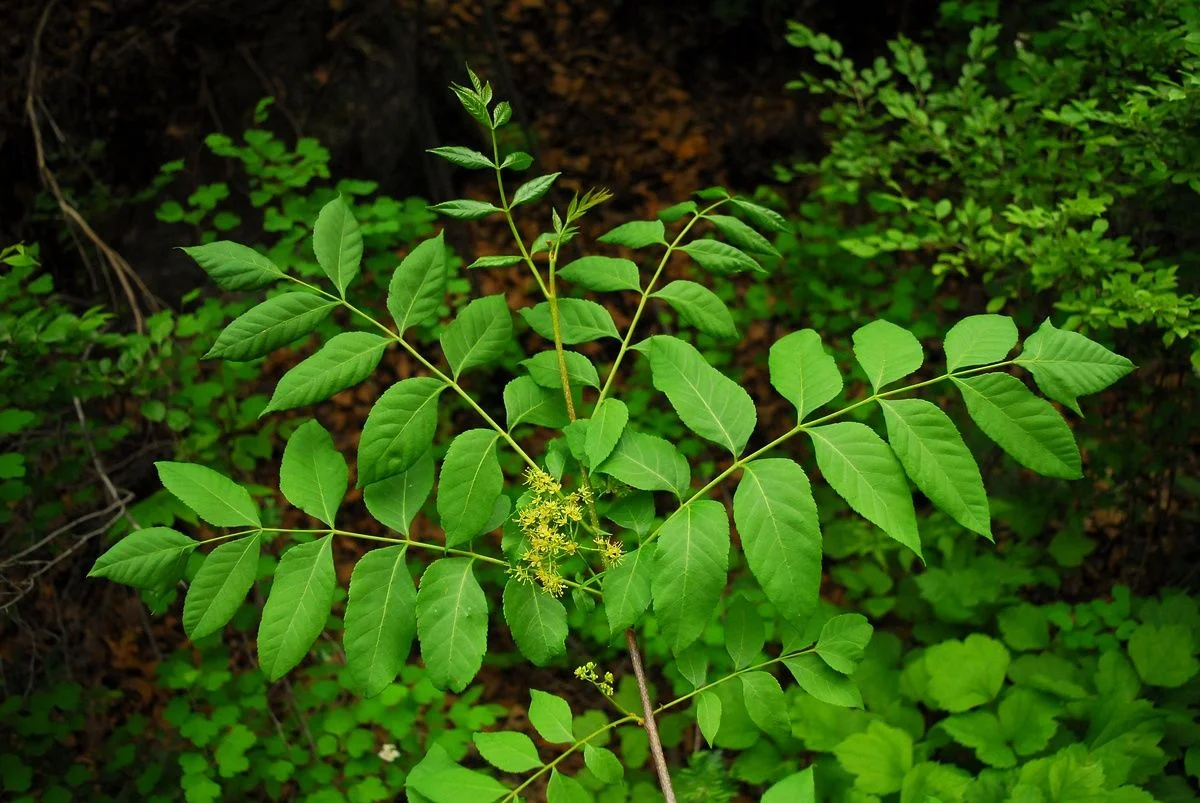
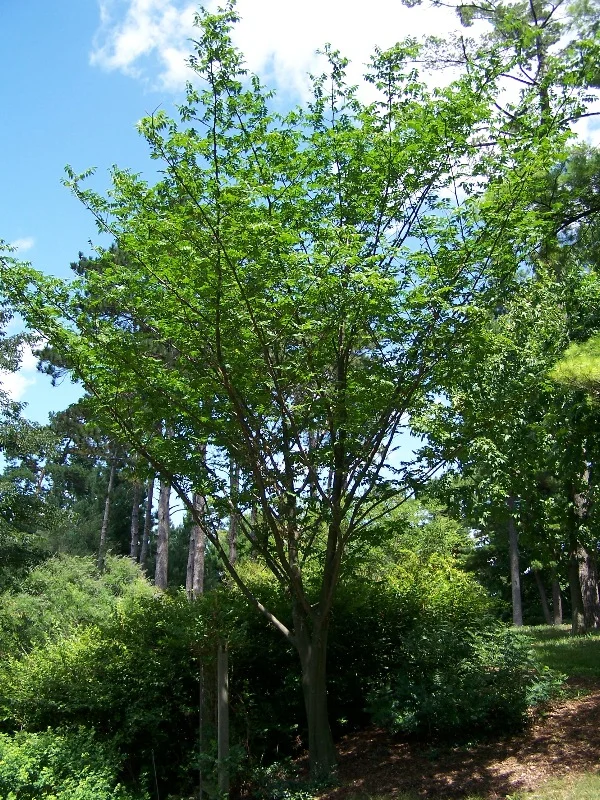
Typical Japanese Bitterwood (Picrasma quassioides var. quassioides)
Picrasma quassioides var. quassioides: Bitterwood Guide
Growing as a deciduous shrub or small tree, this variety thrives in montane forests across East Asia. Its wood and bark contain intense bitter compounds that serve as a natural defense mechanism against herbivores.
It plays a significant role in traditional Asian medicine and ecological systems.
Taxonomy
- ∟ царство Plantae
- ∟ division Tracheophytes
- ∟ subdivision Spermatophytes (Seed plants)
- ∟ Angiosperms
- ∟ mesangiosperms
- ∟ eudicots
- ∟ Superrosids
- ∟ rosids
- ∟ malvids
- ∟ order Sapindales
- ∟ family Simaroubaceae (Quassia family)
- ∟ genus Picrasma (Bitterwood Tree)
- ∟ species Picrasma quassioides (India quassia)
- ∟ variety Picrasma quassioides var. quassioides (Typical Japanese Bitterwood)
Morphology
The variety is recognized by:
- Pinnate leaves with 9 to 15 finely serrated leaflets
- Greenish-yellow flowers arranged in axillary corymbose cymes
- Red obovoid drupes that turn black when fully mature
Applications
Common applications include:
- Gastrointestinal remedies targeting indigestion and parasites
- Agricultural pest control using natural leaf extracts
- Woodcraft for carving small durable utensils
Interesting facts
The wood is so bitter that insects rarely attack it. Extracts have been historically used as a hops substitute in brewing beer.
Geography of distribution
- China
- Japan
- Korea
- India
Sources
- Govaerts, R. et al. (2025). Plants of the World Online. Kew Science.
- World Flora Online (WFO).
- GBIF Secretariat (2025).
Technical Information
External Databases: GBIF