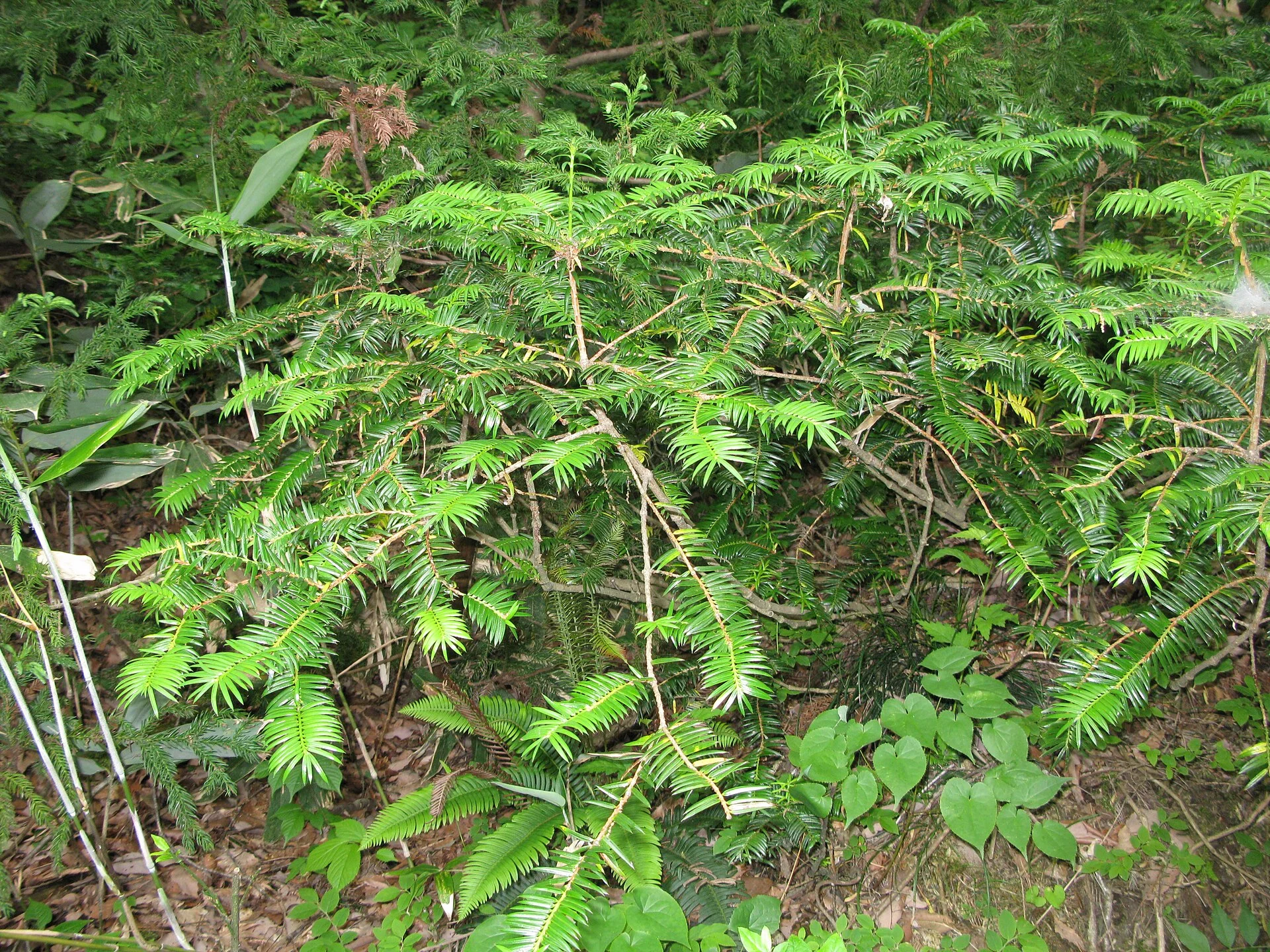
Creeping Kaya Nut-nutmeg (Torreya nucifera var. radicans)

Chabogaya Creeping Japanese nutmeg-yew Dwarf nutmeg-yew
#616D3E
#507237
#7D9552
#98AE6E
#88B766

Torreya nucifera var. radicans - Creeping Japanese Nutmeg-Yew

Adapting to the heavy snowfalls of the Japanese coast, this prostrate evergreen shrub exhibits a creeping growth habit that protects it from harsh winters. It grows primarily in the understory of mountainous forests, often alongside deciduous beech trees. The low-profile canopy allows it to survive under heavy snowpacks without breaking.

This variety represents a key ecological component of the subalpine plant communities in Japan. Its unique habit makes it a subject of significant ecological interest among botanists studying cold-climate adaptations.

Taxonomy

Morphology

The habit of this variety is characterized by a creeping stem where the lower trunk lays prostrate and branches ascend to a height of about 3 meters. The young branches typically display a distinct reddish hue.

Its reproductive organs and needles show adaptations to humid, snowy environments. These structures help the plant photosynthesize efficiently under low-light conditions.

  • Leaves: Linear needles measuring 20 to 25 millimeters long, featuring a glossy dark green upper surface and stomatal bands below.
  • Needle Tips: Sharply pointed apices that are highly rigid and painful to touch.
  • Arils: Seeds enclosed in a green fleshy aril that ripens to a deep purple-brown in the second autumn.

Flowering season

May (flowering), October of the following year (seed maturity)

Jan
Feb
Mar
Apr
May
Jun
Jul
Aug
Sep
Oct
Name
Dec

Applications

This variety plays a vital role in preventing soil erosion on steep, snow-prone slopes due to its spreading root system. It is also cultivated occasionally in specialized alpine gardens as a slow-growing ground cover.

Botanical institutions utilize it to study the genetic divergence between prostrate and upright forest trees. Its resilient branches are sometimes used in local rustic crafts.

Interesting facts

Known locally in Japan as Chabogaya, the name refers to its miniature or dwarf stature. It routinely grows mixed with other specialized prostrate shrubs that form the unique Sea of Japan forest floor flora.

The flexible, creeping branches are so resilient that they can bend completely flat under several meters of snow and spring back undamaged in spring.

Geography of distribution

  • Japan

Sources

  • Kew Plants of the World Online (POWO)
  • World Flora Online (WFO)
  • National Museum of Nature and Science, Tokyo

Technical Information

External Databases: GBIF, POWO