Withania (Ashwagandha) Genus: Overview and Characteristics
Across the sun-drenched, arid landscapes of North Africa and South Asia, resilient shrubs thrive silently while harboring a rich history of ancient healing practices. These plants belong to the genus Withania, a group of flowering species famous for their biological potency and adaptability. Their inconspicuous appearance belies the complex chemical compounds hidden within their roots and foliage.
The genus gained widespread recognition primarily due to its most famous member, ashwagandha, which has been utilized in traditional medicine for millennia. Today, modern science continues to explore these plants for their unique pharmacological properties. Their ability to survive in harsh, dry soils makes them a fascinating subject for both ecologists and botanists.
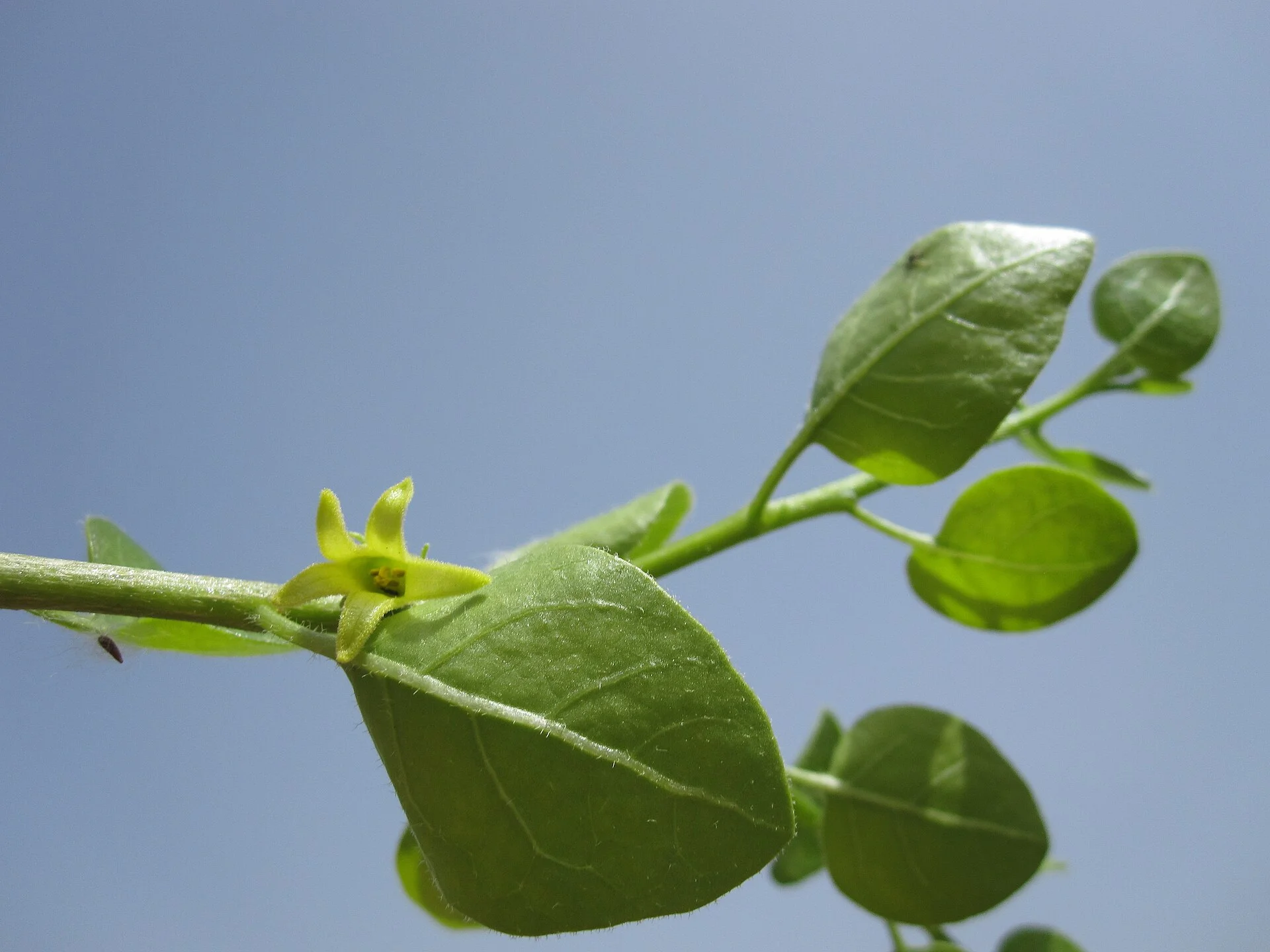
Species of the genus Withania are typically erect, highly branched shrubs or perennial herbaceous plants. Their stems are often covered with stellate or branched trichomes, which give the foliage a velvety or greyish texture. The leaves are simple, entire, and arranged alternately or in unequal pairs along the stem, displaying a characteristic known as anisophylly.
The reproductive structures are compact and strategically placed to ensure successful pollination. The flowers are small, hermaphroditic, and develop either individually or in dense axillary clusters. Each flower features a campanulate calyx with five teeth and a bell-shaped corolla that is fused up to half of its length.
Following fertilization, the plant produces a distinctive and eye-catching fruiting structure. The fruit is a smooth, globose berry containing numerous kidney-shaped seeds. Crucially, the calyx expands dramatically to form an inflated, papery bladder that completely encloses the ripening berry, protecting it from herbivores.
Flowering season
Flowering typically occurs from mid-summer through autumn.
Jan
Feb
Mar
Apr
May
Jun
Jul
Aug
Sep
Oct
Name
Dec
Applications
The economic and cultural significance of the genus lies primarily in its medicinal and utility applications. The roots of Withania somnifera, commonly known as ashwagandha, are highly valued in Ayurvedic medicine as a powerful adaptogen. They are frequently used in supplements aimed at reducing stress, improving sleep quality, and boosting cognitive function.
In addition to medicinal uses, certain species have practical applications in food production. For instance, the berries of Withania coagulans contain active enzymes capable of curdling milk. This property makes them a popular vegetable rennet for cheese-making in South Asia.
Interesting facts
The genus has a rich history interwoven with science, ancient royalty, and traditional crafts:
Royal Grave Ornaments: Dried fruits of Withania somnifera were discovered inside a floral wreath placed in the innermost sarcophagus of Tutankhamun's tomb, indicating its ancient symbolic value.
Honoring a Geologist: The genus name Withania was established in 1825 by Charles Pauquy, who named it in honor of Henry Witham, a prominent British geologist and writer on fossil botany.
Natural Cheese Maker: The common name of Withania coagulans, "Indian rennet" or "panirband", translates to "cheese-maker" because its extract has been used for centuries to coagulate milk.
A heavily branched Mediterranean evergreen shrub featuring tortuous woody stems, heart-shaped leaves, and green-to-red berries enclosed in an expanded calyx.
Withania martiana is a wild perennial subshrub known for its branched stems, small greenish-yellow flowers, and protective inflated calyx surrounding …